Hello everyone!
I wanted your opinion on the investment strategy
I currently have Livret A + LDDS filled as emergency savings + down payment for a short-term real estate project.
Savings of €500 per month currently
I’m looking for balanced risk-taking, I’ve opened a PEA (Plan d’Épargne en Actions) on which I’m thinking of investing 90% Amundi UCITS World ETF and 10% Amundi Emerging Markets ETF
I’m also thinking of opening Linxea Spirit 2 as a life insurance policy (more defensive purpose) by investing in euro funds and a bit of gold and…?
I was thinking of doing 50% PEA and 50% life insurance.
What do you think about opening a life insurance policy? What would you invest in the life insurance?
What do you think of the strategy?
Thanks in advance!
Hello William,
I like that you’ve kept it simple. I have a few questions:
- Can you specify your age?
- What is your objective regarding the PEA (equity savings plan)?
- What is your objective regarding the life insurance policy?
- Can you wait for your short-term project?
Hello!
I’m 28 years old and I have 3 years before buying property.
The goal of my PEA would be to grow my savings.
For my AV, it would be more of a defensive savings goal but with a higher rate than a Livret A.
The aim being to finance projects later on and to have a supplement for my retirement for example. I don’t yet know precisely how I will use these savings.
The idea in any case is to have a better return than a savings account with controlled risk, I don’t want to lose money in the medium term but I’m well aware that there can be periods of decline. Hence the idea of having a PEA + a less volatile AV.
I’m just starting out and I’m open to any advice you can give me!
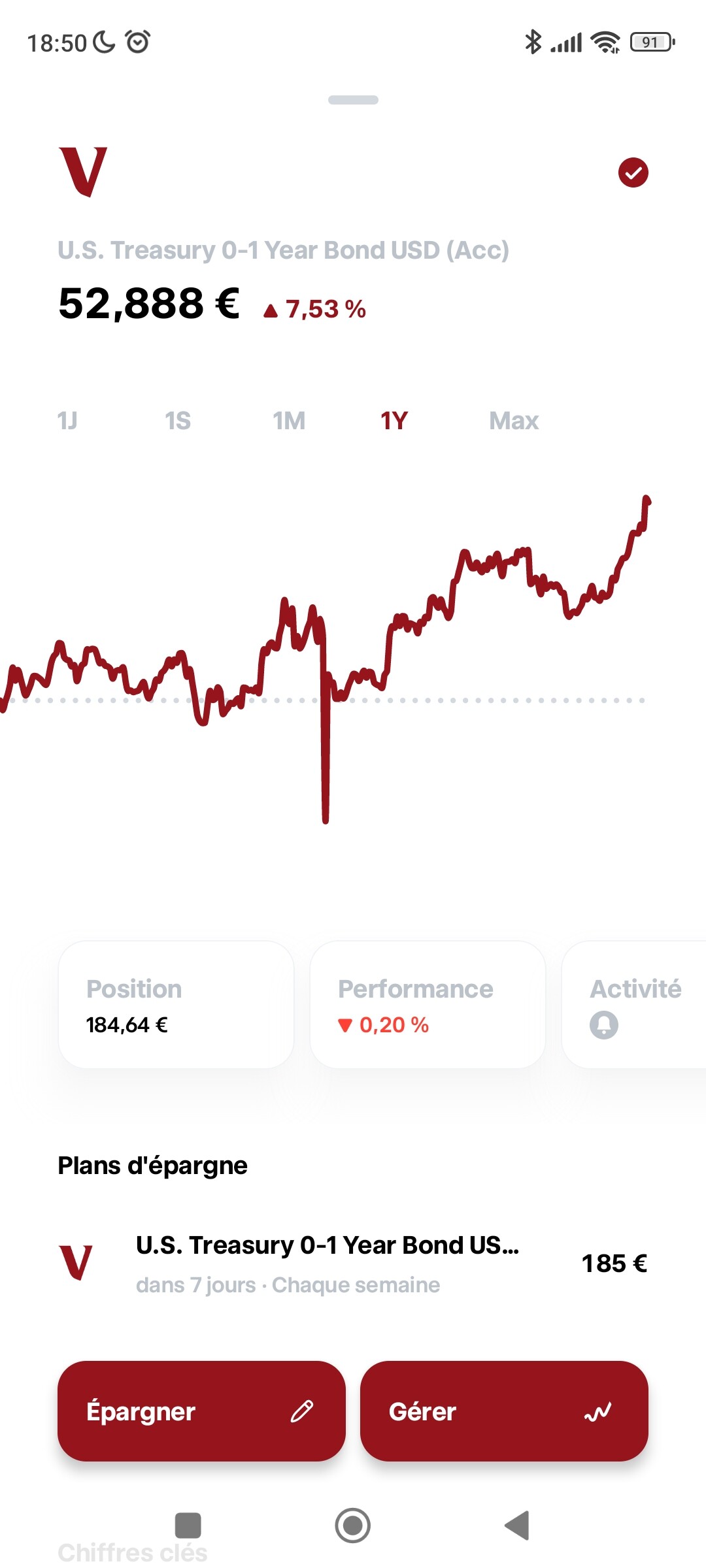
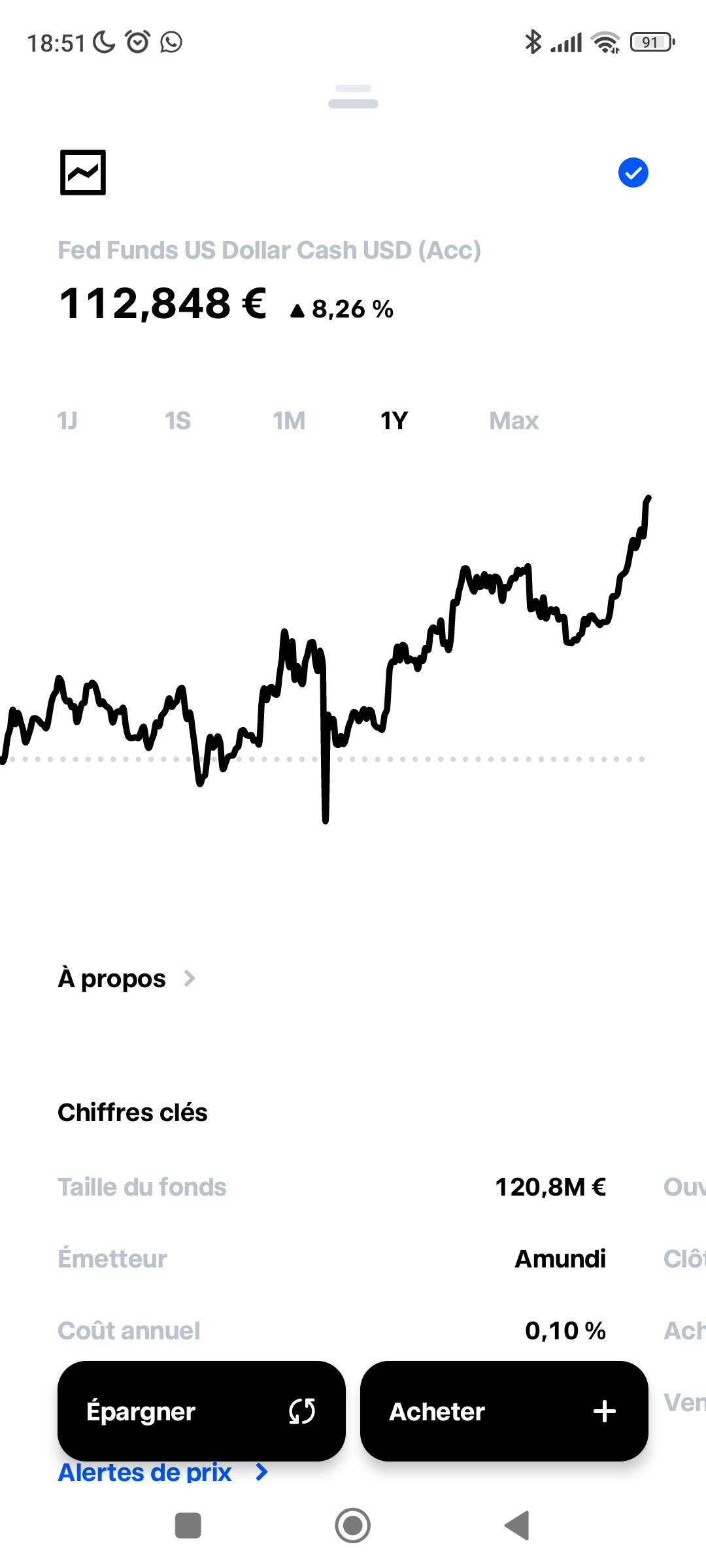
You can try opening a CTO and putting very short-term US investments in it. Either money market funds or bonds with 0-1 year maturity.
Here are some examples:
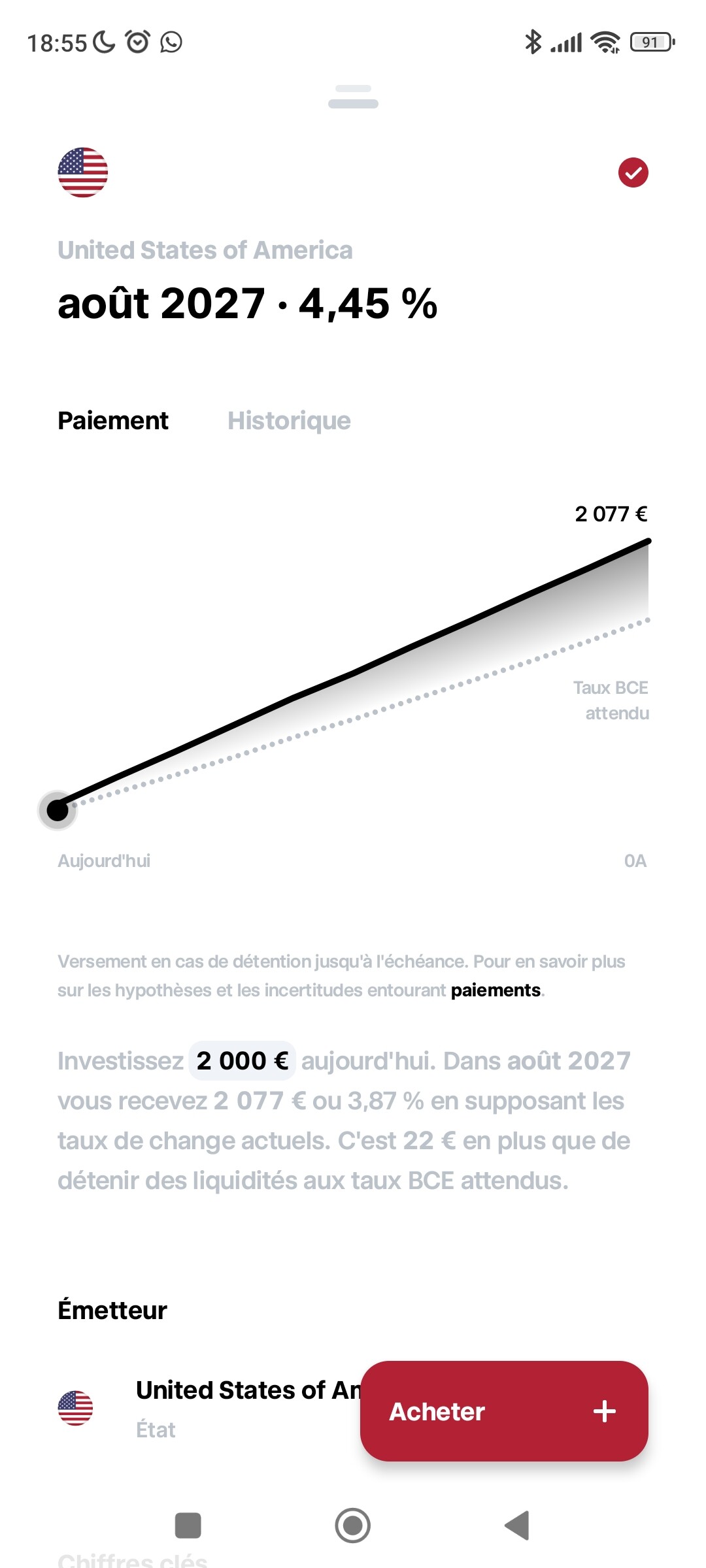
or directly short-term bonds if you’re okay with locking in the invested capital for 1 or more years:
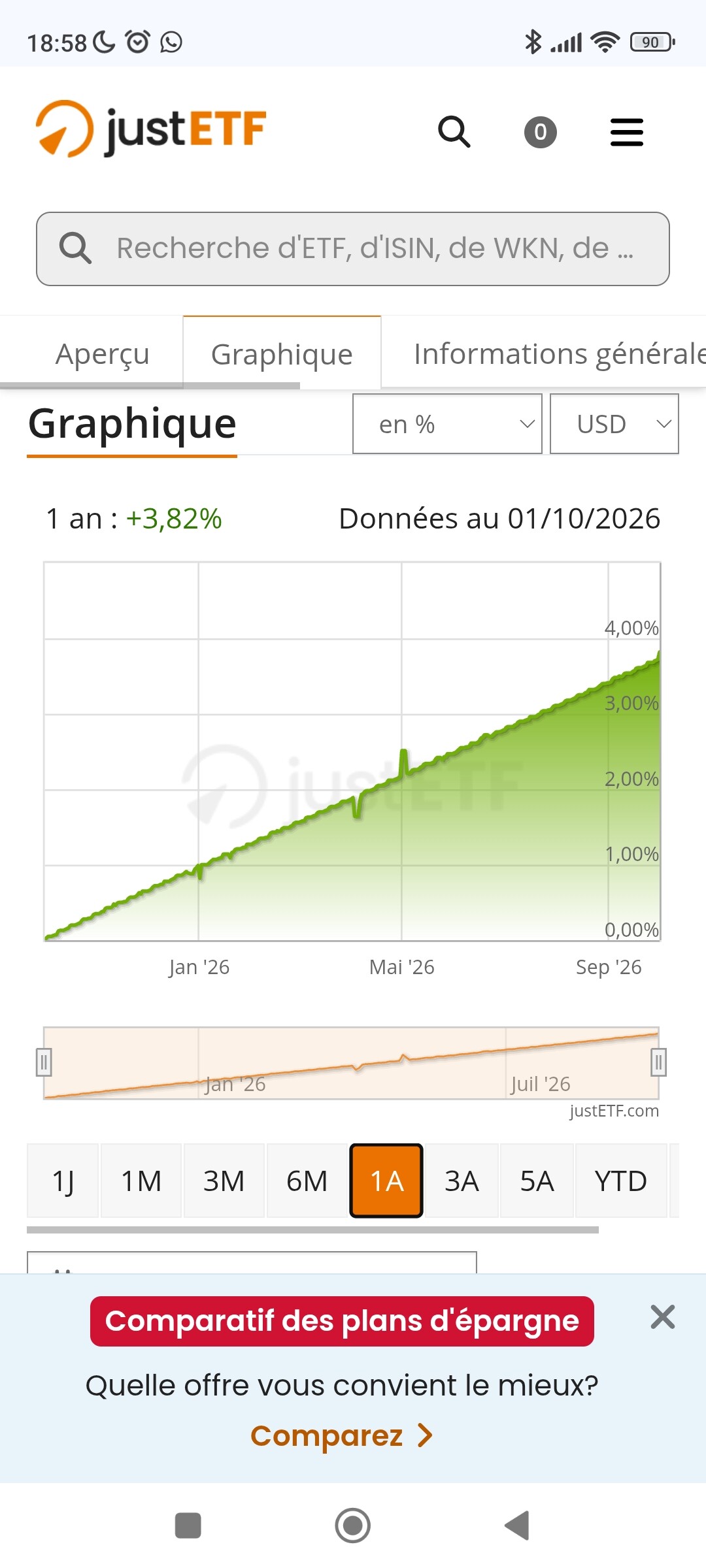
On the first two, the curve fluctuates due to euro-dollar fluctuations, but in pure dollars, it looks like this:
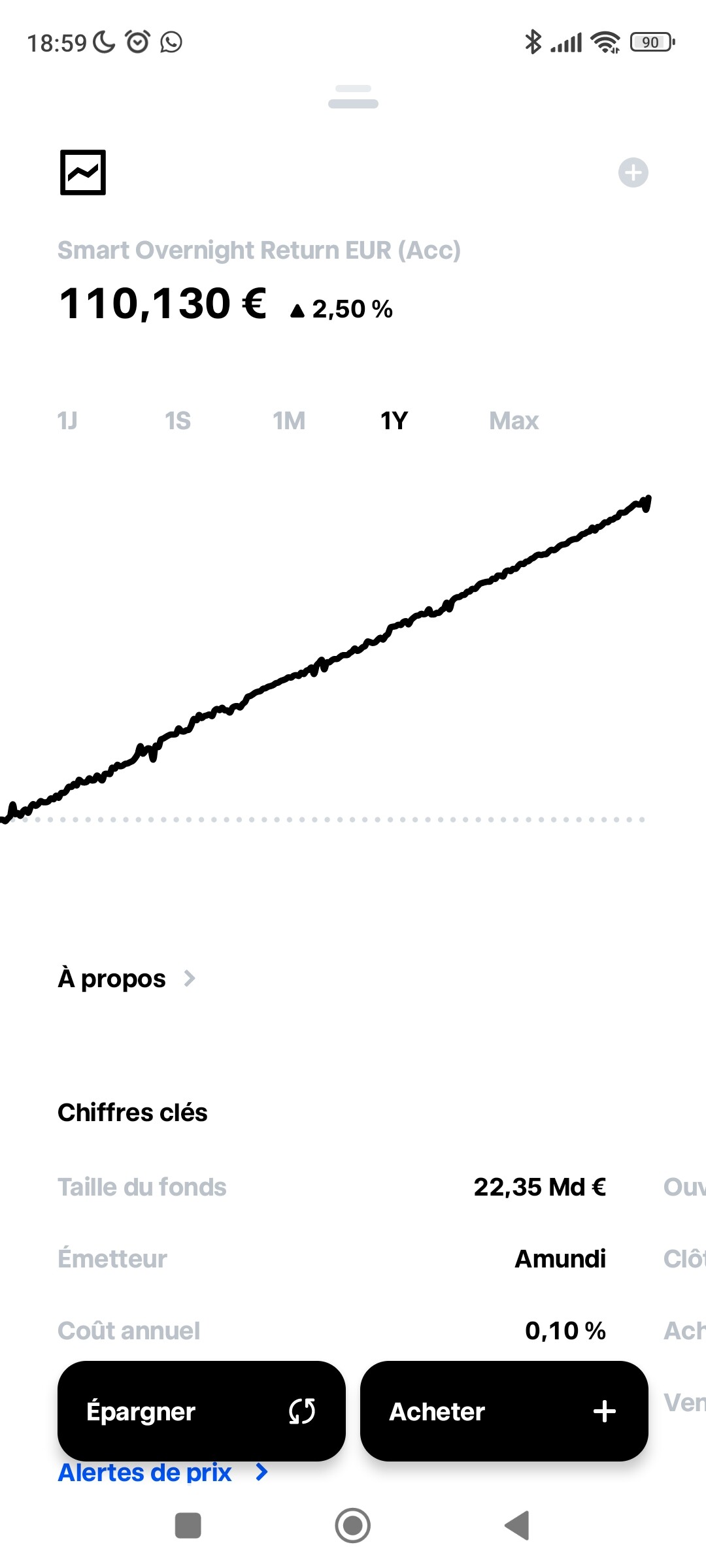
It’s the equivalent of a smart overnight return in euros:
But it yields a bit more due to the weakness of the euro  while remaining secure because the dollar is the only thing that will rise when everything else crashes.
Gold is okay but for the long term because in the short term there will be negative volatility, so it’s not absolute security. Money market or near-money market funds are more secure.
But on the CTO I will be taxed more?
You’re thinking of the CTO in addition to the AV and PEA?
Yes, more taxed but on a higher rate of return, so more net gains on resale.
Okay, which one should I prioritize between the first two you sent me? Should I aim for 1 year on these investments? Low risk?
The fed fund if you’re not afraid of swaps. It’s a bit like having a term deposit account at a bank but more liquid.
The 0-1 year treasury achieves roughly the same performance, it just takes longer to adjust because it holds physical bonds so there’s a delay of a few months, sometimes to our advantage or disadvantage. That’s the one I chose because I prefer physical holdings.
The holding period doesn’t matter at all, it progresses or drops by a few micro percentages every day (in dollars). However with the euro/usd conversion, you’ll sometimes see drops like today at -0.17% but that’s just because the dollar lost 0.17 against the euro today.
So rather than thinking in terms of holding period, you just need to exit during periods when the dollar is worth more than the euro, which is most of the time
Thank you for all this information!
And what do you think about the strategy I mentioned in my first message?
For your age and stated risk profile, your strategy seems appropriate. You can even do 2/3 PEA 1/3 life insurance. You have plenty of time to weather crises.
A slightly more aggressive and optimized alternative would consist of:
Phase 1: Funding for medium/long-term projects for later (5-10 years).
- Open your life insurance policy and stop contributing.
- €500 DCA on the PEA
In 5 years you will have built up €35,000 in capital. In 8 years €60,000. If the market phase is favorable, you allow yourself this project; otherwise, it’s postponed. If the market is OK, you launch your project and close the PEA.
Phase 2: Long-term project funding (retirement):
- Restart PEA investment (with full €150k cap).
- Age 50: start funding life insurance for diversification.
The overall idea is to benefit from the PEA twice: once for a medium-term project (5-10 years), for example. Then use it by closing it to reset the cap at €150k in a new PEA. This type of approach can be interesting but requires a fairly positive temperament (which is my case), and the medium-term project must be able to accept opportunistic realization (waiting for favorable conditions). At worst, if everything goes wrong, phase 1 simply becomes a long-term project, you will have quickly filled the PEA and you can diversify into another wrapper (life insurance, taxable brokerage account…).
Your young age and high DCA are your strengths for this type of strategy. Even if your DCA remains at €500 throughout your working life, you fill the cap in only 25 years. Your long-term project can easily be deferred to your late 30s/early 40s. This gives you time to partially use the wrapper to fund, with good returns and favorable tax conditions, a project of less than 10 years.
1 Like
Thank you for your detailed response!
For the PEA, only an Amundi world ETF? Or a bit of emerging markets with it? Or something else?
To better explain this currency exchange story:
Basically, the 7.53% figure you see combines two things that work completely independently of each other:
- The base performance (in dollars): This is what the U.S. Treasury bonds purchased by the fund actually return. It’s the money generated by the interest (the coupons) from these bonds.
- The exchange rate effect (EUR/USD): This is a multiplier that applies when converting this value into euros. If the dollar rises against the euro, it adds a bonus for you; if the euro rises, it eats into your final performance in euros.
But in any case, it’s better than a euro money market fund, but you can have both; on Spirit 2, for example, there’s the BNP Cash Overnight in euros, but it yields less.
For your question:
- The euro fund performs worse than inflation but won’t fluctuate. It’s useful for guaranteeing capital or cushioning inflation a bit, but you lose out in the long run.
- Gold is good long-term, but will experience short-term volatility.
Having both doesn’t hurt; I myself have about 10% in gold. I’m not a fan of the euro fund; I consider it as a cash pocket. Now, if the rest scares you, why not—for example, I had 40% put into euro funds for my mom because she’s afraid of volatility. But rationally, putting money into something that yields 3% with 2.5% inflation and 0.6 in management fees + social security contributions and taxes, even reduced taxes, the math doesn’t add up.
1 Like
An MSCI World + Emerging Markets ETF or a single MSCI ACWI is sufficient. In short, what you had already planned is good.
1 Like
Thank you Frédéric! 90% world and 10% emerging, does that seem good to you?
And what do you think about the life insurance?
I’m not really sure how to allocate it
Yes, in any case this allocation is not set in stone. You can adjust it over time. If you believe in emerging markets, put a little bit more, if you’re still skeptical 90/10 is fine. If my memory serves me right, I’m at 82% 18% I think. Don’t worry too much about it, these two ETFs generally follow the same market trend. It’s over the long term that we’ll see the differences.
1 Like